Thermochromic Ink: Fun Marketing for Beverage Labels
Home › News › Thermochromic Ink: Fun Marketing for Beverage Labels
2026-08-04 published · updated
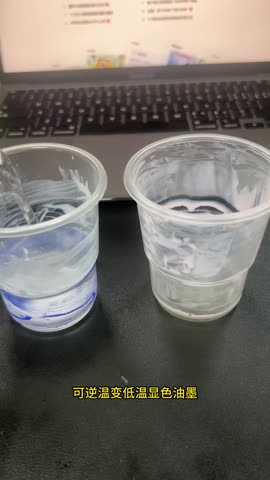
SJH reversible thermochromic ink: turns blue at low temperature and fades when warmed — key to beverage label interactive marketing.
Thermochromic ink turns beverage labels into interactive marketing: color changes with temperature, consumers photograph and share, generating free word-of-mouth.
Ideas
Chilled indicator: label colors when cold enough
Hand-warmth interaction: hidden text or patterns appear
Selection, detection, printing and ordering — answered.
What marketing value does thermochromic ink bring to a beverage label?
It turns a passive label into an interaction. When the consumer holds the bottle, pours hot water or chills it, the label changes colour — a see-it-to-believe-it effect that people naturally photograph and share, generating word of mouth at no media cost.
What are the common thermochromic label mechanics?
Four: chill indicators that develop colour once cold enough; hand-warmth reveals where holding the bottle exposes hidden text or graphics; temperature warnings on hot drinks; and seasonal editions where different temperatures show different colours.
Will thermochromic labels run on existing presses?
Yes. Thermochromic ink runs on screen, gravure, flexo and pad printing, in water-based formulations meeting RoHS and REACH, with reversible or irreversible behaviour.
Could the effect trigger early in transit or on shelf?
That depends on the chosen trigger band. Setting the trigger point above warehouse and shelf temperatures prevents accidental activation in normal storage; the exact band is fixed against the cold-chain or ambient distribution conditions of the product.
What do I need to specify to go from design to production?
Three things: the colours and graphics before and after the change; the trigger temperature and reversibility requirement; and the printing process and substrate. From that the formula can be customised and printed proofs supplied for validation before the bulk run.